
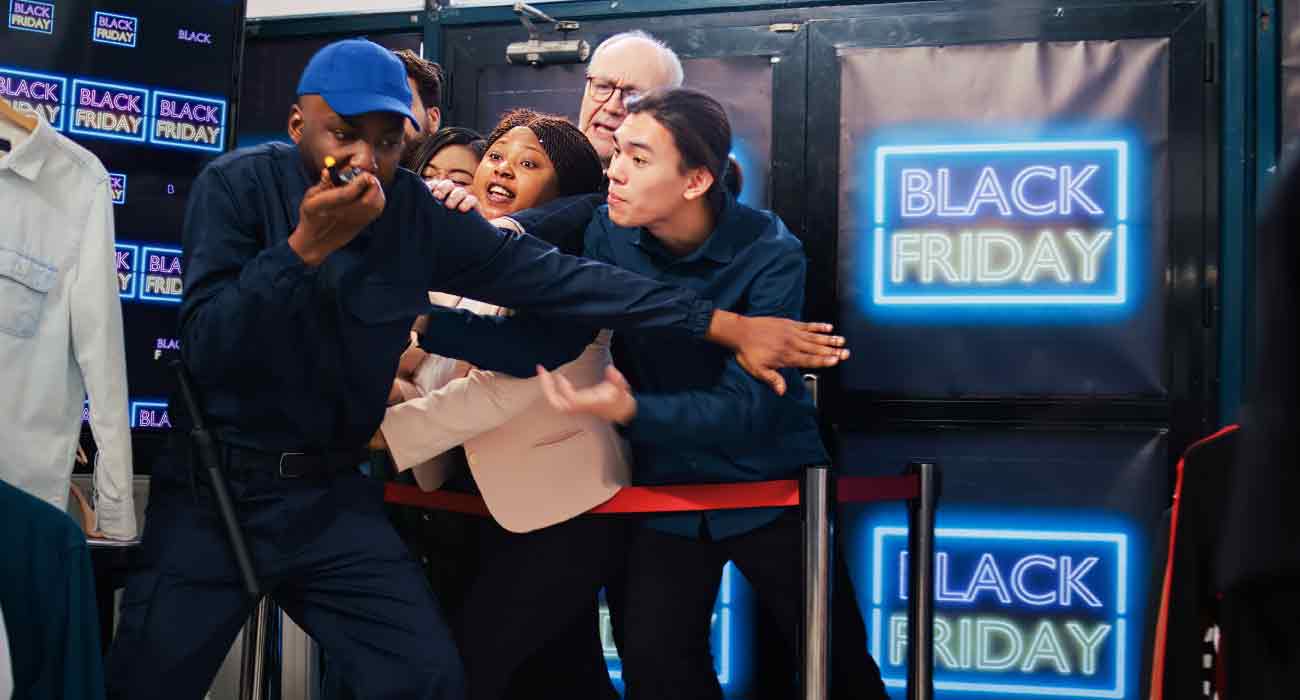
Black Friday 2025 delivered record sales, but there was little frenzy. AI surged, perks mattered, and consumers paid the price as the once-iconic event stretched into a slow-burning season.
Black Friday — and the holiday shopping season overall — may be more crucial than ever for retailers in 2025. However, the event has undergone a dramatic transformation from the door-busting spectacle it once was.
“The Black Friday that we have come to know and love has changed,” Circana Chief Retail Advisor Marshal Cohen told Retail Dive.
Heading into this year’s shopping period, consumers were navigating cuts to federal support programs and ongoing inflation, while retailers faced slipping consumer sentiment—despite the surprising resilience of spending.
“We’ve put ourselves in an interesting position of making Black Friday very important, but not as engaged and not a frenzy and not as much of a purchase urgency that we’ve seen in years past,” Cohen added.
Also Read: How to Win Holiday Sales Without Losing Public Trust
Black Friday Is No Longer Just Friday
While the term implies a single-day event, Black Friday has evolved into a multi-day (or even multi-week) marathon of deals. Because of that, early results tell only part of the story, said Melissa Minkow, CI&T Global Director of Retail Strategy and Insights.
“I think it’s too fluid and too confusing at this point to limit Black Friday to just one day, given how frequently consumers are being offered deals,” Minkow told Retail Dive.
A clearer picture will emerge as data from Thanksgiving week and Cyber Monday is received. Year-over-year comparisons may remain complicated for 2025 as well, given that 2024 was an election year—a cycle that historically dampens retail sales.
Early numbers, however, show robust digital performance.
- U.S. e-commerce sales hit $11.8 billion on Black Friday, a 9.1% increase year over year (Adobe Analytics).
- Salesforce reported $18 billion in online U.S. sales, up 3%.
- Shopify’s offline sales via its POS system saw 26% growth year over year.
Strong topline results, however, rarely tell the full story. And this year, one early conclusion is clear: the biggest Black Friday loser may be the consumer.
Here’s a look at the standout highs and lows so far.
WINNERS
Artificial Intelligence
AI-driven shopping surged this year. According to Adobe:
- AI traffic to U.S. retail sites spiked 805% compared to 2024.
- Shoppers arriving via AI tools were 38% more likely to convert than those from non-AI traffic sources.
- AI tools were used most for video games, appliances, electronics, toys, personal care and baby products.
Salesforce reported that third-party AI agent traffic grew 300% globally and in the U.S. during the first half of Black Friday. AI and agents drove $3 billion in U.S. online sales.
AI also reshaped customer service: agentic service interactions rose 42% from Thanksgiving to Black Friday.
Also Read: GenAI Search Is Rewriting the Shopper’s Playbook
Retailers With Exclusive Store Perks
With discounts looking largely the same across retailers, the stores offering unique incentives stood out.
“The only stores that were really busy early in the morning were basically Target,” Cohen said.
Target distributed free limited-edition tote bags filled with giveaways to the first 100 customers. Lowe’s offered buckets of products to the first 50 guests, along with a chance to win an in-stock appliance worth up to $2,000.
But excitement was tempered by a lack of merchandising freshness. Many of the “hot” products mirrored last year’s selections, Cohen noted, limiting shopper enthusiasm.