
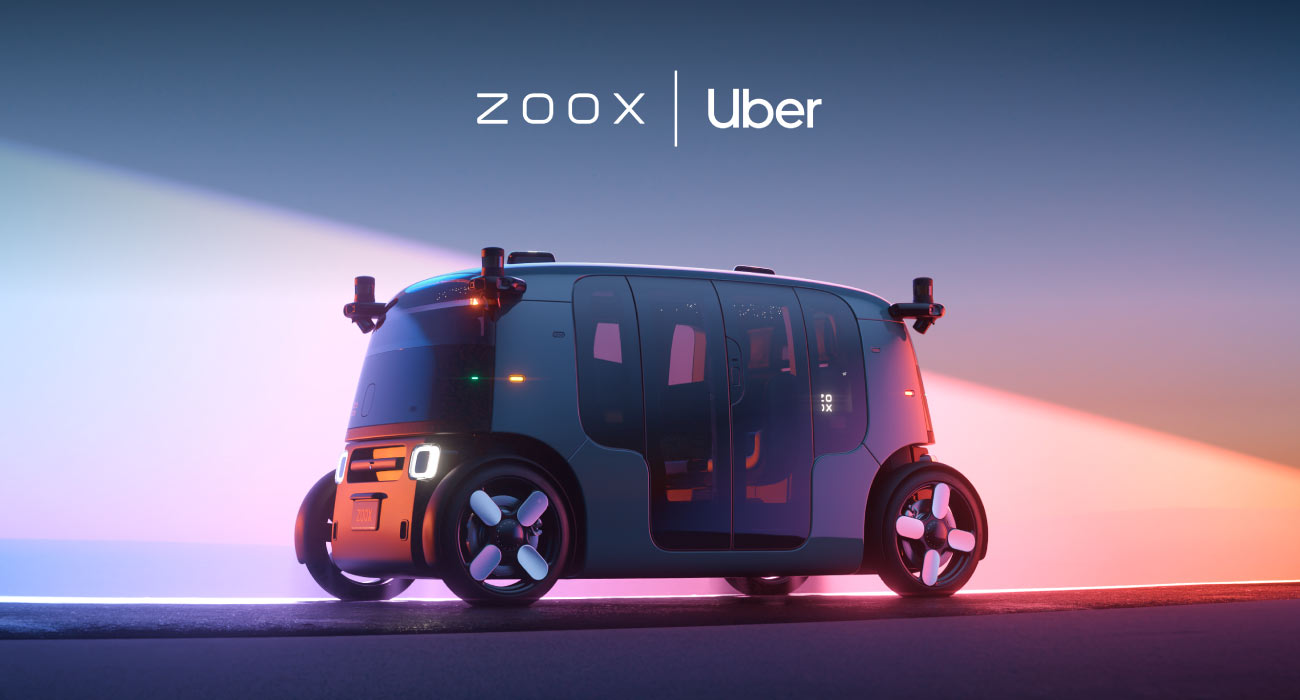
Zoox’s purpose-built robotaxis are coming to the Uber app — Las Vegas this summer, Los Angeles by 2027. Amazon’s autonomous vehicle bet just got a lot more visible.
Zoox has spent years building a robotaxi that looks like nothing else on the road. Starting this summer, millions of Uber riders in Las Vegas will be able to hail one.
Zoox and Uber announced a strategic partnership on Tuesday that will deploy Zoox’s purpose-built robotaxis through the Uber app. The rollout begins in Las Vegas this summer, with Los Angeles following by mid-2027. Riders in both cities will also continue to have access to Zoox vehicles through the standalone Zoox app — but the Uber integration marks the first time Zoox has opened its service to a third-party platform.
For a company that has operated largely out of public view since Amazon acquired it in 2020, that’s a significant shift.
What Makes Zoox Different
The vehicle at the center of the partnership is not a retrofitted sedan with a sensor array bolted to the roof. Zoox’s robotaxi was designed from the ground up for ride-hailing — no steering wheel, no front-facing driver seat, a cabin built explicitly for passenger comfort, conversation, and shared rides. In the crowded autonomous vehicle field, it is a genuinely unusual piece of hardware.
“The Zoox robotaxi is unlike any other vehicle on the planet — it was purpose-built from the ground up to deliver an extraordinary experience,” said Dara Khosrowshahi, Uber’s chief executive. “Zoox’s commitment to safety and its advanced autonomous driving technology make it an ideal partner.”
Aicha Evans, Zoox’s chief executive, framed the partnership as accelerating the integration of autonomous mobility into daily life. “This partnership is an opportunity to continue advancing the use of autonomous mobility in daily life,” she said. “Zoox will provide a differentiated rider experience to those who already know and love the convenience of riding with Uber.”
Also Read: Your Rebrand Is Failing. Have You Tried Listening?
Why the Partnership Makes Sense for Both
For Zoox, the calculus is distribution. Building a consumer ride-hailing brand from scratch — app downloads, rider trust, geographic coverage — is an enormously expensive problem that has nothing to do with building a better autonomous vehicle. Uber has already solved it, at a scale of more than 72 billion trips. Plugging into that network lets Zoox focus on what it actually does: engineering and operating the vehicle.
For Uber, the logic runs in the other direction. The company has been explicit about its strategy of partnering with autonomous vehicle developers rather than building the technology itself — a portfolio approach that already includes Waymo in several US cities. Adding Zoox extends that coverage with a vehicle that offers a meaningfully different passenger experience, and deepens Uber’s position as the default consumer interface for autonomous mobility regardless of which hardware wins.
Las Vegas, where Zoox is already operating, is the near-term proving ground. Los Angeles — larger, more complex, and a far bigger market — is where the partnership’s commercial ambitions will be tested.