Zevia’s new “Real Soda for Real Humans” campaign uses AI anxiety as a marketing foil, continuing a strategy that ties artificial intelligence to artificial ingredients.
Zevia is back with a robot. The better-for-you soda brand has launched “Real Soda for Real Humans,” a national advertising campaign that uses artificial intelligence as a creative foil — linking the cultural backlash against AI-generated content to the artificial ingredients it has long criticized in rival products.
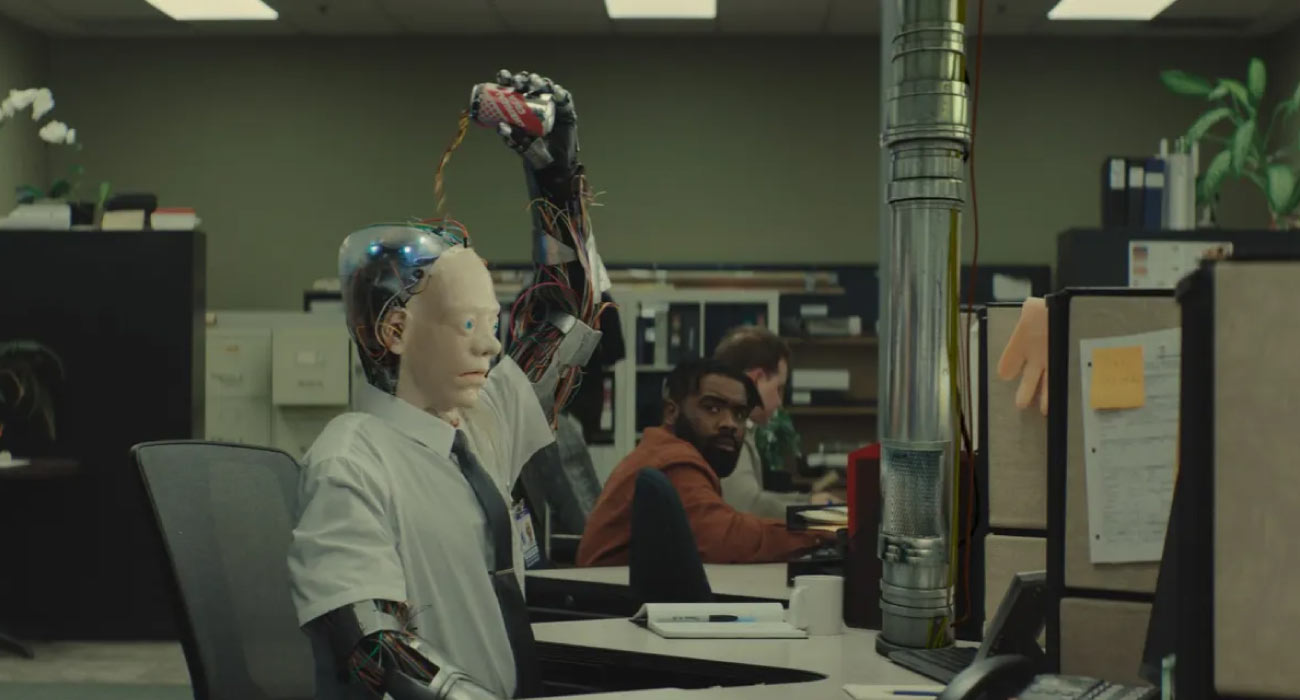
The campaign, developed with independent creative agency Party Land, follows an office worker who is confronted by a creepy robot coworker for buying Zevia at a vending machine instead of, in the robot’s words, “artificial sludge” with “chemicals to grease your inside circuits.” The employee takes a sip of Zevia. The robot begins to malfunction, a robotic arm falling off in the process.
The media buy includes 15- and 30-second national connected television ads, placements on Meta and YouTube, and a multiday activation at South by Southwest inspired by CAPTCHA human-verification prompts, where visitors must prove their humanity to enter the brand’s space. A “Prove You’re Human” digital sweepstakes runs alongside the campaign.
Also Read: Your Rebrand Is Failing. Have You Tried Listening?
The effort continues a strategy Zevia has been building since 2024, when it launched “Break from Artificial” — a campaign that used AI-generated imagery to underscore the uncanny valley effect and took direct aim at Coca-Cola’s decision to use generative AI for its holiday marketing. “Real Soda for Real Humans” takes a more grounded visual approach while sharpening the same argument: that artificial intelligence and artificial ingredients are, in spirit, the same problem.
Zevia is not alone in making that connection. Blue Diamond’s Almond Breeze debuted a campaign in January starring the Jonas Brothers, in which the trio are pitched AI-generated content by clueless agents before choosing to simply be themselves. Liquid Death, around the Olympics, ran a commercial featuring an AI-generated figure skater who turns into a fiery-eyed demon after the brand’s rejection of artificial sweeteners is mentioned. The anti-AI playbook has become increasingly common in the consumer packaged goods category.
For Zevia, the marketing push carries commercial urgency. The nearly 20-year-old brand — which sweetens its beverages with stevia leaf extract and competes in a crowded better-for-you market alongside probiotic rivals Poppi and Olipop — reported net sales of $161.3 million last year, up 4%, aided by wider distribution at Walmart. The company expects marketing to account for between 12% and 13% of revenue in 2026, slightly above 2025 levels.
Also Read: Marketing That Predicts, Not Reacts
Amy Taylor, Zevia’s chief executive, told investors on a recent earnings call that the brand’s 2025 performance “was supported by powerful marketing that clearly differentiated Zevia as the antidote to the artificial.” She added that upcoming summer activities with new and existing brand ambassadors would represent the company’s “most significant investment in reach and cultural relevance to date.”