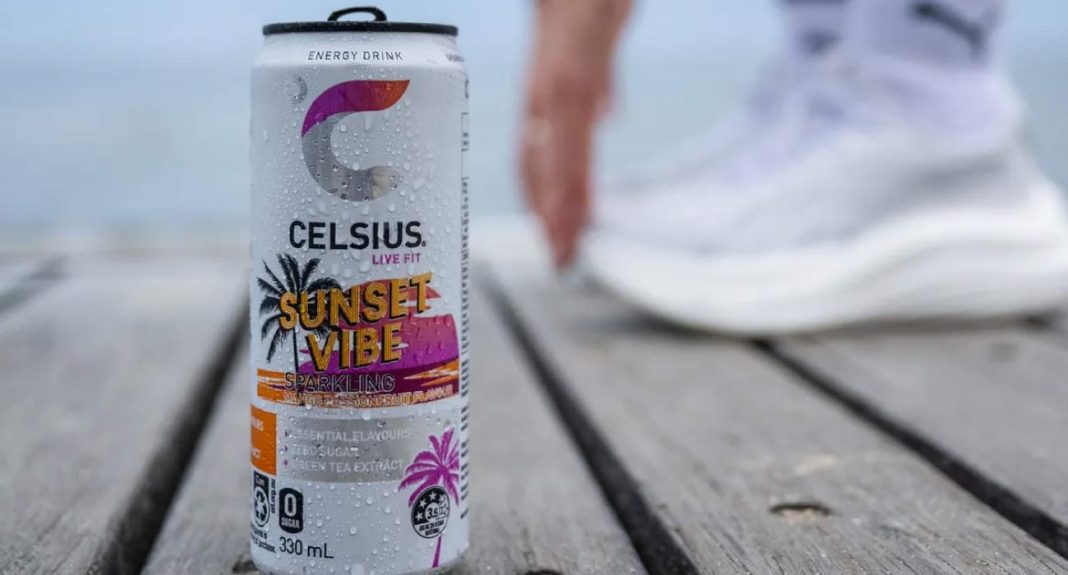

With $2.5 billion in revenue and three energy drink brands, Celsius Holdings is building an in-house creative studio and doubling down on culture to turn big brands into mega brands.
Celsius Holdings had a record year in 2025. Now it is trying to make sure the three energy drink brands under its roof — Celsius, Alani Nu and Rockstar Energy — each have a reason to exist beyond the can.
The company reported full-year revenue of $2.5 billion, growth of more than 85% year over year, and reached approximately 20% dollar share of the United States energy drink category in the fourth quarter. The results were driven in large part by Alani Nu, the women-focused, influencer-friendly brand Celsius Holdings acquired in April 2025, which generated more than $1 billion in revenue after the deal closed. PepsiCo, which increased its stake in the company in August, stands to benefit alongside shareholders.
“With an evolved operating model and our brand integration firmly on track, we are entering 2026 with positive momentum, scale and confidence in our ability to deliver sustainable, long-term shareholder value,” said John Fieldly, chairman and chief executive.
Also Read: Super Bowl 2026: When the Commercials Became Bigger Than the Game
Building Brands, Not Beverages
The commercial success has coincided with a structural rethink of how Celsius Holdings markets itself. In September, the company created two new senior roles — chief brand officer and chief creative officer — designed, in Fieldly’s words, to scale its “big brands into mega brands.” Kyle Watson, who has led marketing for the Celsius brand in North America since 2019, was appointed chief brand officer and now oversees brand equity across the entire portfolio.
“There’s a need to make sure that each brand within our portfolio has very clear individual and authentic identities,” Watson said. “We’re here to build brands, not beverages.”
To support that ambition, Celsius Holdings announced the creation of a full-service in-house creative studio — a significant shift for a company that previously relied on a mix of internal teams, outside agencies and content creators. The studio will have dedicated teams for each brand and will allow the company to develop content without briefing external partners who, as Watson put it, “don’t understand the brand and don’t have the brand’s lens.”
“It really gives us so much in-house mobility and allows us to pivot really quickly,” Watson said. “Whether it’s social or commercial content, it’s an incredible resource that allows us to be extremely nimble.”
Formula 1, Run Clubs and Real-Life Community
The Celsius brand is deepening its presence in Formula 1, where it is now the global energy drink partner of the Aston Martin team after previously sponsoring Scuderia Ferrari. The partnership is anchored around the brand’s “Live. Fit. Go.” platform, which Watson describes as the brand’s DNA rather than a sponsorship arrangement.
“We don’t want it to be throwing logos on cars and helmets,” Watson said. “It’s a call to action, a mantra that we’re tying our brand to, and we want that to come out in how we’re showing up in Formula 1 as a cultural move.”
In practice, that has meant creating run clubs around Formula 1 race locations in partnership with fitness app Strava, including an activation around last month’s Australian Grand Prix. The brand is also continuing its “Fit Stop” events, which combine workouts, DJ sets and product sampling, while building connections with hyperlocal wellness communities. A broader loyalty and digital ecosystem is in development.
Also Read: Holiday Shoppers Want Discovery, Not Just Discounts
Three Brands, Three Personalities
The portfolio strategy reflects a broader shift in the energy drink category that Watson describes as moving away from extreme sports and male-dominated performance positioning and toward a lifestyle-driven space increasingly shaped by Gen Z women.
Alani Nu was built for exactly that consumer — one looking not just for functional energy but for a brand that aligns with her values and feels like an extension of her personality. Watson compared the dynamic to fashion: in the modern energy category, a beverage is more like an accessory than a utility.
Rockstar Energy, founded in 2001 and once holding 10% of the global energy drink market behind Red Bull and Monster Energy, addresses a different opportunity. Watson sees a chance to revive the brand’s original grungy, music-centric identity at a moment when Gen Z consumers are rediscovering millennial-era rock bands like Deftones and System of a Down.
“I think there is a way to bring back this cool, original brand equity that Rockstar had, and bring back that consumer — but also attract this new male, core energy consumer,” Watson said. “It’s a little bit irreverent, and it allows us to have a completely different personality within our portfolio.”