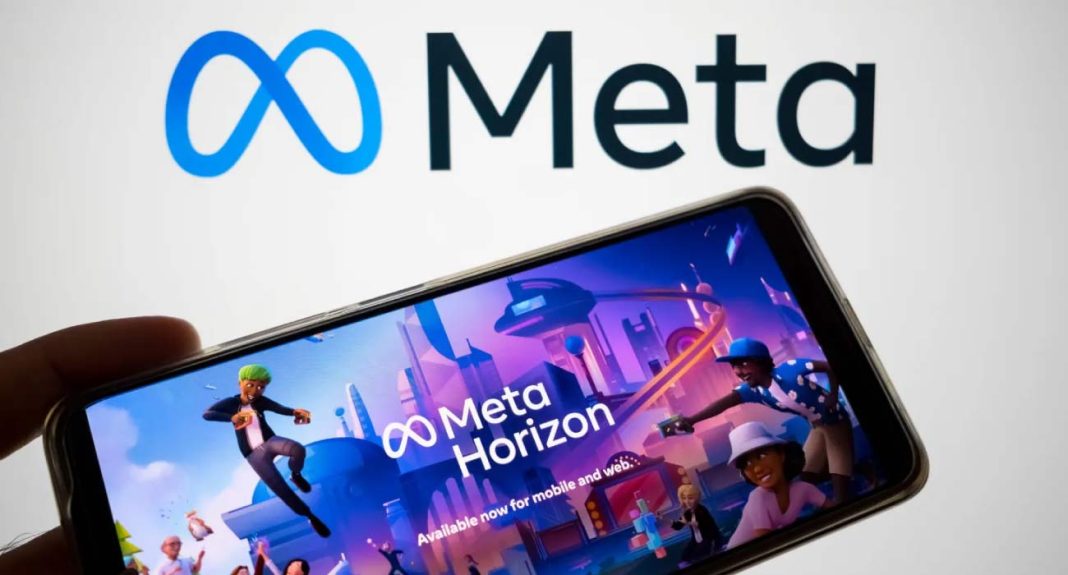

Meta is pulling Horizon Worlds from its Quest VR headsets by June, effectively ending the virtual reality social network that was once central to its metaverse ambitions.
Meta is shutting down the virtual reality version of Horizon Worlds, the social platform that was once the centerpiece of the company’s costly and ultimately unsuccessful pivot to the metaverse, the company announced Tuesday.
The Horizon Worlds app will be removed from the Quest VR headset store at the end of March and fully discontinued on the platform on June 15. After that date, the experience will be available only through a standalone mobile app.
“We are separating the two platforms so each can grow with greater focus, and the Horizon Worlds platform will become a mobile-only experience,” the company said.
The decision marks a significant retreat from an ambition that Mark Zuckerberg, Meta’s chief executive, once described as the defining bet of the company’s next decade. When Meta changed its name from Facebook in October 2021 to signal its commitment to virtual reality, Zuckerberg wrote that he expected the metaverse to reach a billion people within ten years, host hundreds of billions of dollars in digital commerce and support millions of creators and developers. Horizon Worlds never drew more than a few hundred thousand active monthly users.
The shutdown comes weeks after Meta cut more than 1,000 employees from Reality Labs, the division responsible for its metaverse and virtual reality efforts. Among those affected were studios working on virtual reality titles, including Ouro Interactive, an in-house studio created in 2023 specifically to build first-party content for Horizon Worlds.
Reality Labs has posted billions of dollars in operating losses every quarter since its launch. In the fourth quarter of 2025, the unit reported an operating loss of $6.02 billion.
Horizon Worlds officially launched in late 2021 as a virtual, three-dimensional social network where users could interact and play games through avatars, operating exclusively on Quest headsets. Meta introduced a mobile app version in September 2023, designed to lower the barrier to entry for users without VR hardware — functioning, in concept, similarly to Roblox. That expansion failed to meaningfully grow the platform’s audience.
Also Read: CES 2026: The Year “Physical AI” Claimed the Real World
In a February blog post, Samantha Ryan, vice president of content at Reality Labs, said Meta would shift Horizon Worlds’ focus to “almost exclusively mobile” while doubling down on its broader VR developer ecosystem. “By breaking things down into two distinct platforms, we’ll be better able to clearly focus on each,” Ryan said.
Meta has since redirected its strategic and financial attention toward artificial intelligence, which has become the company’s organizing priority under Zuckerberg — displacing the metaverse vision that defined and ultimately strained the company’s public identity for much of the past four years.