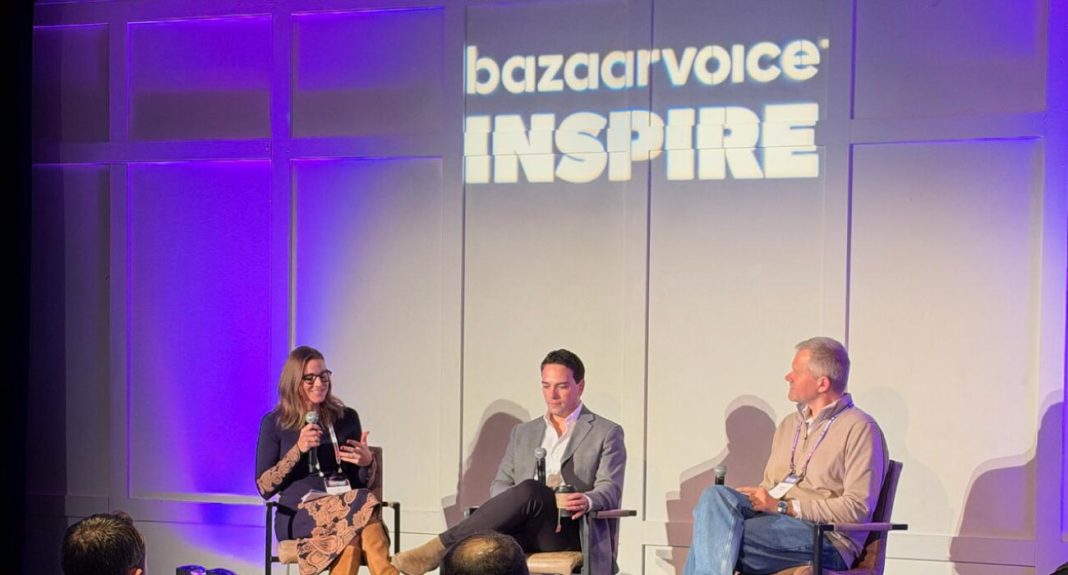

The tie-up pairs Profound’s AI visibility tracking with Bazaarvoice’s review content, as new research finds shoppers hesitate over private-label picks with few reviews.
Bazaarvoice and Profound announced a strategic partnership Oct. 20 to help brands track their visibility in AI search engines such as ChatGPT, Perplexity and Google AI Overviews, and to deploy user-generated content (UGC) to win recommendations.
Bazaarvoice sources, displays and amplifies UGC. Profound is an AI marketing platform. Together, they say, they offer brands a complete way to measure AI visibility and act on what they find.
“AI is rewriting how people discover what to buy, so marketers need to rethink what earns attention,” said Trevor Pyle, head of marketing at Profound. “Bazaarvoice has spent two decades building the infrastructure behind authentic consumer content. Together, we can show brands where they’re missing and give them the tools to do something about it.”
Under the partnership, joint clients can use Profound’s analytics to monitor millions of AI prompts, detect where competitors are winning citations and identify content gaps in real time. The analytics include Bot View, a tool that shows how AI crawlers inspect and fetch site data.
To close those gaps, Bazaarvoice offers targeted sampling campaigns, its Content Coach tool, and its Authentic Discovery API, which the company says makes ratings, reviews, and visual media crawlable by AI engines.
Also Read: Are Your AI Agents Ready to Be Trusted?
What the research found
The announcement came with new research from both companies. They say it shows brands and retailers need established brand equity, technical AI visibility and verified customer reviews to turn AI recommendations into sales. When shoppers use AI to research specific needs, they focus on exact product attributes. That lets more products surface, but customer feedback remains the deciding factor, the companies said.
Key findings:
- Openness to a mix of brands: Bazaarvoice found that 44% of consumers expect AI product recommendations to include a mix of well-known legacy brands, fast-growing challengers and private-label options. Two-thirds (66%) research or compare store-brand alternatives while shopping with AI, 37% frequently and 29% occasionally.
- Leaders still dominate: Across five categories Profound studied (athletic apparel, beauty and personal care, consumer electronics, food and beverage, and furniture and home), category leaders hold an average share of voice of about 57% in AI product recommendations. The figure ranges from 83% in technical categories to 30% in home goods. Challenger brands captured 14% to 49% in most categories, mainly on long-tail and niche queries.
- Reviews as gatekeeper: Bazaarvoice found that 77% of consumers are likely to consider an AI-recommended private-label pick alongside national brands (51% somewhat likely, 26% very likely), and 56% trust AI recommendations for private and national brands equally. But 34% of shoppers who hesitate over an unfamiliar private-label pick cite the same reason: too few customer reviews.
- What closes the gap: A high star rating (22%) and a clear AI explanation of why the product fits their needs (22%) are the top two factors that move shoppers from considering a private-brand recommendation to buying it.
Also Read: What Separates a Big Holiday Season From a Good One?
“Winning in the AI era isn’t about choosing between traditional brand equity and AI optimization—it’s about using verified customer feedback to power both,” said Brenda Tuohig, senior vice president of strategic partnerships at Bazaarvoice. “An established reputation gets your brand into the conversation, but crawlable UGC provides the authentic social proof AI engines need to cite you and consumers need to trust the recommendation. Our partnership with Profound bridges the gap between deep prompt analytics and real-world content execution, giving brands and retailers the exact infrastructure needed to turn AI discovery into revenue.”