
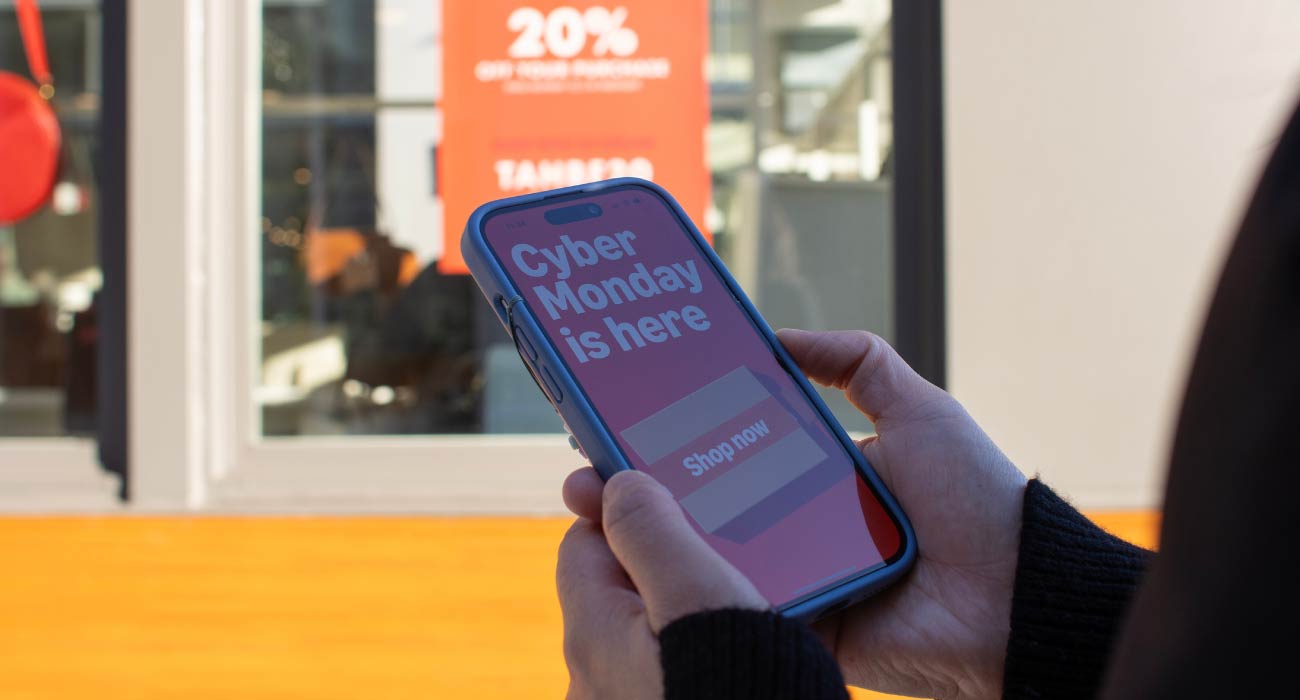
Cyber Monday hit $14.25 billion in U.S. online sales as BNPL topped $1B. Adobe, Salesforce, and Shopify report substantial holiday gains despite tech hiccups and economic strain.
Cyber Monday closed out the U.S. holiday shopping weekend with another record-setting surge in online spending, primarily driven by the continued rise of buy-now, pay-later services.
Online sales reached $14.25 billion, a 7.1% increase from last year, according to Adobe Analytics. Across the full five-day stretch from Thanksgiving to Cyber Monday, shoppers spent $44.2 billion online — up 7.7% from 2024. For the second consecutive year, Black Friday outpaced Cyber Monday, increasing 9.1% to $11.8 billion, indicating that deal-hungry consumers are accelerating their purchases.
BNPL proved to be one of the weekend’s most potent accelerants. The short-term financing option drove $1.03 billion in Cyber Monday sales, representing a 4.2% year-over-year increase, as cost-conscious shoppers continued to rely on installment plans despite persistent economic uncertainty.
“Competitive and persistent deals throughout Cyber Week pushed consumers to shop earlier,” said Vivek Pandya, lead analyst at Adobe Digital Insights. He added that shoppers have embraced generative AI assistants and browser tools to navigate sales — the second holiday season in which AI has played a meaningful consumer-facing role.
Salesforce reported similar trends: U.S. Cyber Monday revenue rose 6% to $13.6 billion, with higher average selling prices both domestically and globally. Discounts ticked upward but remained relatively modest.
Also Read: The Treat Economy: How Small Luxuries Boost Retail Returns
Shopify, meanwhile, touted a blockbuster weekend for its merchants, with $14.6 billion in global sales, up 27% year-over-year. The platform briefly battled technical difficulties, acknowledging a “system degradation” that temporarily limited merchant access on Monday. Still, Black Friday peaked at $5.1 million per minute at 12:01 p.m. EST, with the U.S. leading sales volume.
The strong results arrive at a complicated economic moment. Consumers are only beginning to feel relief from federal support programs reinstated after the government shutdown, even as inflation and borrowing costs continue to shape household budgets.
What Cyber Week made clear is that shoppers are still spending — strategically, digitally, and increasingly with installments.