
Workers are curious. The organizations they work for are making it harder — and AI is accelerating the problem.
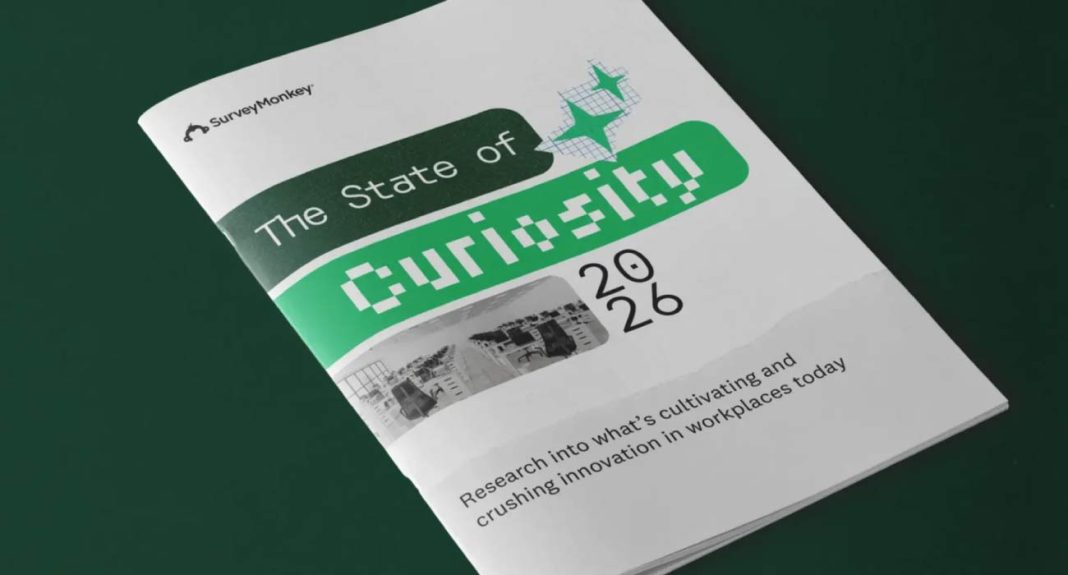
Nearly all workers describe themselves as curious. Less than a third say their workplace rewards them. That gap, and what is driving it wider, is the subject of SurveyMonkey’s 2026 State of Curiosity report — and its findings arrive at a moment when the question of what humans contribute alongside artificial intelligence has never been more consequential.
The report, based on a survey of 1,925 US workers conducted in April, introduces the concept of “curiosity capacity” — defined as the ability to stay open, ask sharper questions, and keep learning in an environment where AI produces polished answers faster and easier than ever before. The central argument is pointed: as AI commoditizes outputs, the differentiator is no longer what workers produce. It is the questions they ask, the assumptions they challenge, and what they notice that AI missed.
Also Read: CES 2026: The Year “Physical AI” Claimed the Real World
Three Forces Draining Curiosity at Work
The report identifies three workplace dynamics that are systematically suppressing curiosity on the job.
The first is what the report calls the AI middleman. Directors and vice presidents are nearly three times as likely as individual contributors to use AI instead of asking a colleague a question — 33 percent versus 12 percent. Conversations that once built shared judgment and organizational understanding are being replaced by prompts, quietly eroding the connective tissue of institutional knowledge.
The second is the scroll reflex. More than a third of workers who use AI say they accept AI-generated responses as-is or after only a cursory check — even though 58 percent say they trust colleagues more than AI. The path of least resistance is winning over the habit of deeper inquiry.
The third is the efficiency squeeze. Pressure for speed has compressed the space available for exploration and discussion. Only 38 percent of workers describe most meetings as genuine forums for open discussion and idea exploration. More than half say that additional unstructured time would help them be more curious at work.
The Cost of Not Asking
The organizational consequences are already visible. Half of workers say they have had to redo work because the right questions were not asked at the outset. Forty-six percent say they have witnessed time or money wasted because assumptions went unchallenged.
Yet the conditions that would correct this are precisely those that current workplace norms discourage. Nearly half of workers — 44 percent — say that asking too many questions makes them look incompetent. Among Gen Z workers, the numbers are particularly striking: 41 percent report pretending to understand something they do not, 45 percent feel pressure to already know the answer, and 42 percent have stayed silent because they felt they had already asked too much.
“AI allows us to impersonate leadership without doing the hard work of actually leading,” said Anne Morriss, founder of The Leadership Consortium, whose commentary features in the report.
Jack Soll, a distinguished professor of management and organizations at Duke University’s Fuqua School of Business, offered an equally pointed observation: “AI might make us individually smarter, but the opposing force is going to make us all the same — which might make it harder to be creative and innovative.”
Also Read: Visa Bets Big on AI Commerce, Unveils New Partnerships and Innovations
What Workers Say They Need
The report also surfaces a clear picture of what workers believe would help. Seventy-seven percent want more opportunities to brainstorm with colleagues. Seventy percent want greater psychological safety to ask questions without consequence. Sixty-one percent want stronger connections across teams, and more than half want both reduced workload and more unstructured time in the working day.
“Curiosity isn’t the problem,” said Katie Miserany, Chief Communications Officer and Head of Global Marketing at SurveyMonkey. “The way we work is. We hope this inspires everyone to start designing workplaces that strengthen curiosity capacity instead of draining it.”
The full report is available at surveymonkey.com/curiosity/state-of-curiosity-report.