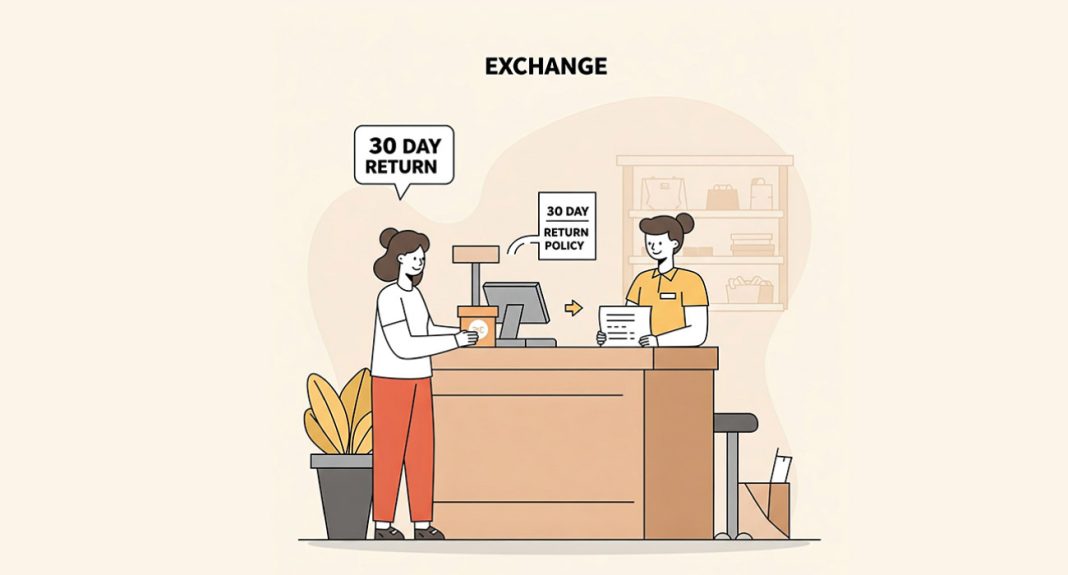

Retailers tightening return policies to combat $850 billion in annual losses may be solving the wrong problem — and alienating the loyal customers they can least afford to lose.
Retailers are tightening policies in 2026 as a response to snowballing returns that totaled nearly $850 billion last year, roughly 15.8% of annual sales. But while it’s true that brands have to do something to protect shrinking margins, the question is whether introducing shorter return windows, additional fees, and extra hoops for all customers is the right move.
Imagine a longtime shopper, one who’s spent thousands with your brand over the years, trying to return a pair of shoes that didn’t fit, only to be met with obstacle after obstacle. From their perspective, nothing changed — except that a brand they trusted suddenly stopped trusting them.
Stricter returns can help deter abusers, but they can also drive loyal customers to spend with a competitor whose policies feel fairer. The retailers that see return policies as a CX advantage in 2026 won’t aim to have the most lenient or the strictest rules. Instead, they’ll strive for precision: cracking down on fraudsters while maintaining a frictionless return experience for customers who’ve demonstrated trust over time.
Blanket Policies Punish Your Best Shoppers
For years, retailers raced to make returns as quick and painless as possible. But as the gap between when a refund was issued and when a return was validated continued to grow, “no questions asked” began to turn into “no consequences.”
The line between normal shopping behavior and policy gaming has blurred. Many shoppers believe practices like wardrobing (wearing and then returning clothing) and bracketing (ordering multiple sizes or colors to try on) are acceptable.
Now, with margins under pressure, retailers are pushing back. In 2024, returns and claims cost retailers about $103 billion. Those are real losses, and stricter return policies are a knee-jerk reaction many retailers are already putting into place.
But blanket policies that tighten everything at once and are easy to roll out tend to punish loyal, low-risk customers while repeat abusers just find new ways around the rules. Not only that, but refunds slow down, exceptions become inconsistent, and customers shift future spending to brands that still feel easy to deal with.
How Brands Can Protect CX Without Encouraging Abuse
The key to getting returns right in 2026 is using automated decisioning to maintain the same CX that loyal shoppers have come to expect while adapting quickly as abuse patterns evolve.
Risk-Based Routing
Instead of a blanket policy that treats repeat customers and repeat abusers the same way, risk-based routing segments shoppers by trust levels (trusted, standard, and high-risk) based on signals such as their return rate, claim history, support interactions, and ordering behavior. This moves loyal shoppers through the process quickly, while those exhibiting potential harm hit a speed bump.
Automated Approvals
With unified post-purchase visibility, patterns can be spotted in real-time. When a refund is initiated, the trusted customer is automatically approved, while the high-risk request triggers additional verification steps or manual review. The result is seamless CX for the customer you want to keep, without extending the same ease to likely abusers.
Personalization Through Automation
Not only could two shoppers be routed and approved differently, but they could also receive different offers. The loyal customer may receive a prepaid shipping label and an instant refund, while a repeat offender may be limited to store credit or required to cover their own return shipping. Therefore, leniency can no longer be assumed; it must be earned.
Putting Friction Where It Belongs
The customer journey doesn’t end when the package is marked as delivered. What happens next, whether your return policy feels effortless or frustrating, could be the moment a shopper decides if it’s worth coming back.
In 2026, protecting your margins won’t come from being the strictest, nor from staying the most lenient. It will come from using data to create trust-based experiences and being precise about where to place friction. Instead of building your customer experience around bad actors, provide loyal shoppers with the seamless CX they’re used to, and set guardrails against high-risk behaviors. This sends a clear message: trust is a two-way street, and we’ll still make returns easy for the customers who’ve earned ours.