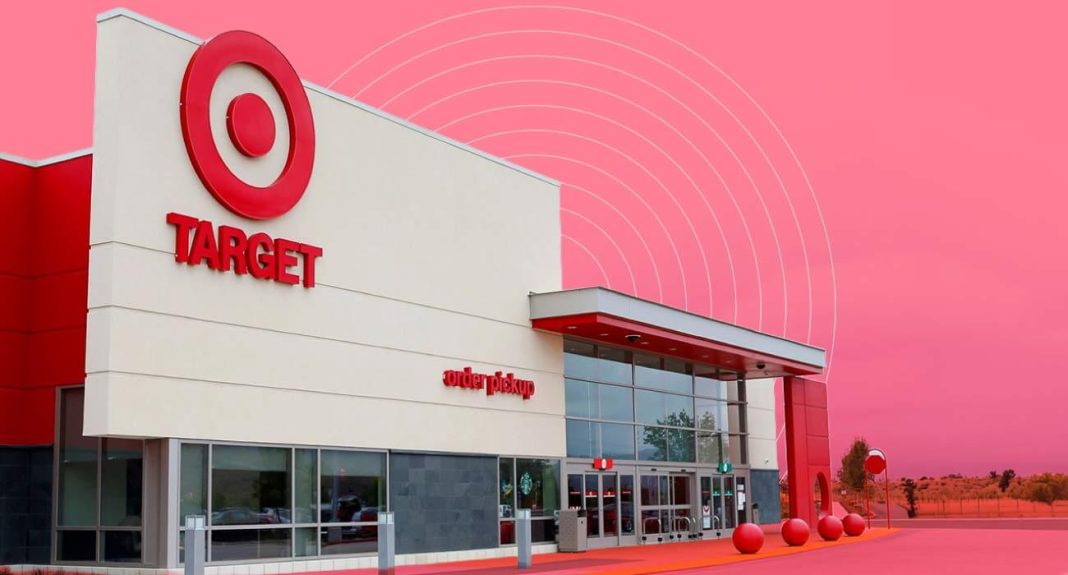

A viral costume controversy is the latest chapter in a longer story: how Target spent three years cycling through crisis, recovery, and relapse — and what that says about measuring brand trust in real time.
On its surface, this week’s story is simple. Target Corp. pulled a Halloween costume — the “Kids’ Glows Under Blacklight Circus Clown” — after social media users and civil rights advocates said its design and promotional imagery evoked blackface and Jim Crow-era minstrel caricatures. The company apologized within days, calling the garment “offensive” and pledging to review how it made it onto shelves in the first place.
That’s the incident. It is not, however, the story. The costume is the third act in a drama that’s been running since 2023 — and the data suggests Target’s brand health has been reacting to a pattern, not a single event.
A Three-Year Arc, Not a One-Week Story
To understand why this particular misstep landed so hard, it helps to walk through what came before it.
2023
Target’s Pride Month merchandise collection draws conservative backlash over some LGBTQ-themed children’s products, prompting the retailer to pull select items and relocate Pride displays in some stores — a decision that, in turn, drew criticism from LGBTQ advocates for capitulating to pressure. Target absorbs criticism from both directions simultaneously, a preview of the tightrope it would spend the next two years.
January 2025
Citing the completion of its three-year DEI goals, Target scales back its diversity, equity and inclusion programs, ending its participation in the Human Rights Campaign’s Corporate Equality Index and winding down its “Belonging at the Bullseye” hiring and supplier-diversity initiative. The timing coincides with the Trump administration’s executive orders eliminating federal DEI mandates.
February–April 2025
Pastor Jamal Bryant leads a 40-day boycott out of his Georgia megachurch, eventually drawing pledges from more than 200,000 people. The “Target Fast” became one of the most visible consumer boycotts in recent retail history.
May 2025
The financial reality lands. Target reports first-quarter comparable sales down 3.8% — with in-store sales down 5.7% — and net sales falling to $23.85 billion, missing Wall Street’s $24.23 billion estimate. CEO Brian Cornell tells reporters the company is “not satisfied with these results,” citing the boycott, tariffs, and softening consumer confidence. Target cuts its full-year guidance. Its stock ends 2025 down roughly 30%.
The Walmart Contrast
The comparison analysts kept returning to was Walmart, which made a similar DEI retreat around the same time and posted a 4.5% same-store sales increase in the following quarter — badly undercutting the idea that DEI rollback alone explains Target’s decline. Roth Capital Partners put it bluntly at the time: consumers weren’t especially loyal to Target to begin with, which is exactly what made a boycott easy to execute.
December 2025
Reputation tracker RepTrak reports early signs of recovery, tying improving “purchase intent” scores to product perception and a leadership transition already underway.
2026
Michael Fiddelke takes over as CEO, framing his tenure around a turnaround built on trust and traffic. It appears to be working — Target posts two consecutive strong quarters, and in its August 19 earnings call, Fiddelke tells reporters the company is “earning more and more trust” from customers, pointing to a 3.6% rise in comparable traffic as the clearest sign that the strategy is working. Net sales for the quarter climb 5.3% to $26.5 billion, beating estimates.
August 25, 2026
Six days after that earnings call, the clown costume controversy breaks.
Also Read: The Loyalty Assumptions Holding Marketers Back
Why the Timing Makes This Worse, Not Just Bad
Lay the sales data next to the sentiment data, and a specific kind of story emerges — one about the gap between financial recovery and brand recovery, and how dangerous it is to mistake one for the other.
Savanta’s BrandVue tracker shows Target’s Brand Affinity “Love” score peaked near 37% at the end of 2024, then dropped sharply to 33% by March 2025 — tracking almost exactly with the DEI announcement and boycott. It then plateaued in the low 30s through most of 2025 and into 2026, never recovering to its earlier peak, before sliding further to 28% in July 2026 — before the costume story broke.
That’s the detail that should concern Target’s marketing organization most: brand-affinity erosion continued even as the company’s own financial metrics told a recovery story. Comparable traffic was up. Sales were beating estimates. The CEO was publicly framing the moment as proof that trust was returning. And underneath it all, a third-party sentiment tracker was showing the opposite trend.
 “The pattern in the data suggests these moments add up rather than fade quickly,” said James Laws, Senior Director of Syndicated Services Team (BrandVue) at Savanta. “It’s hard to pinpoint the exact effect of any one news cycle versus broader brand and market pressures — but the trend line is the story here.”
That’s not so much a contradiction as a warning about which metrics lag and which lead. Sales and traffic are transactional — they measure what customers are already doing. Brand affinity is a better leading indicator of what customers are willing to keep doing when alternatives feel easier to reach. Target’s Q2 numbers said the turnaround was working. Its brand data said the underlying trust deficit hadn’t actually closed — it had just stopped being the thing analysts were asking about on earnings calls.
The Part That’s Actually About Marketing Operations
There’s a second layer to this story that’s easy to miss if you only follow the DEI and boycott narrative: how does a costume like this clear internal review in the first place?
Target said it is “looking closely at how this happened and what needs to change to ensure this won’t happen again” — language that points to a breakdown somewhere in the merchandising and creative approval pipeline, not just a one-off bad call by a single buyer. For a retailer operating at Target’s scale, running thousands of SKUs through seasonal assortment cycles, that pipeline increasingly depends on some combination of automated tagging, AI-assisted content review, and human sign-off — and this is precisely the kind of failure mode that governance-minded marketing technologists have been warning about as more of that review gets automated or accelerated without a corresponding increase in oversight.
It’s also a reminder that brand-safety tooling built for paid media — the systems that flag problematic ad creative before it goes live — has no real equivalent in most retailers’ product assortment and packaging review process. Target has sophisticated systems to catch brand-unsafe advertising. It didn’t have an equivalent gate for a garment carrying its own name into stores nationwide.
Also Read: Why Brands Should Just Ask What Customers Actually Want
What This Means Heading Into the Holidays
Retailers don’t get to choose when reputational moments land, but they do control how much runway they’ve built to absorb one. Target entered the fall and holiday season with financials pointing up and brand sentiment pointing down — a mismatch that a single incident was always going to expose, whether it was this costume or something else.
For marketing and brand leaders more broadly, the operational lesson isn’t really about DEI positioning or costume vetting specifically. It’s that transactional recovery and brand-trust recovery run on different clocks, and treating the faster-moving one — sales, traffic, comp growth — as proof the slower one has also healed is exactly the assumption Target’s own data quietly argued against for over a year. Sentiment tracking exists precisely to catch that gap before it becomes a headline. The evidence suggests Target had access to that warning. Whether the organization treats this moment as confirmation of a trend it already knew about, or as an isolated incident to move past quickly, will likely say more about the next twelve months than the earnings calls do.